
Some of the most meaningful time I spend with families happens at the very end of their pet’s life. As a parent, and an in-home euthanasia veterinarian with Serene Passages, I’ve sat on a lot of living room floors during that final goodbye. I’ve watched how differently children experience it than the adults around them. For many kids, losing a pet is their first real encounter with death. That makes it tender, confusing, and deeply formative — and it means the way we guide them through it matters. One of the simplest, most effective tools I recommend to parents is also one of the oldest: a good book. (Side note: libraries, independent bookstores, and Bookshop.org are great resources for finding these books while supporting your local community.)

Why Books Help Children Process Pet Loss
Children don’t always have the words for grief, and they often can’t sit still long enough to talk it through the way adults do. A picture book meets them where they are. It lets a child watch grief happen to a character first, at a comfortable distance, before turning toward their own feelings. Reading together also gives families a shared language — a way to say “remember when the bunny in the story planted a tree?” instead of asking a child to start a difficult conversation cold. Below, I’ve organized the children’s books about pet loss that I recommend most often by age range, by the type of loss they address, and by spiritual perspective, so you can find the right fit for your family. If you’re looking for how to talk to kids and involve them in this time, check out this article.
Pet Loss Books for Toddlers and Preschoolers (Ages 2–5)
For toddlers and preschoolers, the goal is reassurance and simple, honest language.
-
The Goodbye Book by Todd Parr names big emotions in a way the youngest children can grasp.
-
When a Pet Dies by Fred Rogers (Mr. Rogers) brings his trademark gentleness and is refreshingly factual about what death means.
-
The Invisible Leash by Patrice Karst offers the comforting idea that love connects us even after a pet is gone.
-
Frog and the Birdsong by Max Velthuijs introduces the natural cycle of life and the small rituals — like a goodbye in the garden — that help children feel grounded.
Pet Loss Books for Early Elementary Readers
(Ages 4–8)
Early elementary readers can handle a bit more story and nuance.
-
The Tenth Good Thing About Barney by Judith Viorst is a classic for a reason; it gently turns grief toward gratitude and memory.
-
The Memory Tree by Britta Teckentrup shows how a community remembers someone together.
-
Paws + Edward by Espen Dekko is quiet and emotionally honest about an old dog’s last days.
-
The Rough Patch by Brian Lies is one I point families toward when they’re thinking about welcoming a new pet, because it shows that opening your heart again doesn’t erase the love that came before.
-
A Kids Book About Saying Goodbye to a Pet is interactive and conversation-based.
-
About Death from the Unitarian Universalist Bookstore takes an inclusive, culturally open approach.
Pet Loss Books for Middle Grade Readers (Ages 7–12)
Older children are ready for realism, and sometimes they need it.
-
The Cat Mummy by Jacqueline Wilson is honest — and a little funny — about a child’s attempt to avoid saying goodbye.
-
Do All Dogs Go to Heaven? by M.C. Shoultz and When Pets Die by Emma Thorne both speak directly to euthanasia in language a tween can understand.
-
The Loss of a Pet by Wallace Sife, PhD is more of a practical grief-support resource, best read together by older children and parents who want a deeper framework.
Talking to Children About Euthanasia and Natural Death
In my work, the question I’m asked most is how to explain euthanasia to a child. It deserves its own honest conversation, and the right book can carry a lot of that weight. When a Pet Dies and A Kids Book About Saying Goodbye to a Pet both touch on natural death and euthanasia gently. Do All Dogs Go to Heaven? and When Pets Die address euthanasia head-on, and The Loss of a Pet covers both kinds of loss. My advice: choose language that is clear and never euphemistic. Children take phrases like “put to sleep” literally, and clarity, delivered with love, is kinder in the long run.
Spiritual and Religious Perspectives on Pet Loss
Many families find comfort in stories that reflect their faith, and a book that mirrors your family’s beliefs can make a goodbye feel less frightening.
Christian
Cynthia Rylant’s Cat Heaven and Dog Heaven offer warm, whimsical imagery of a peaceful afterlife, and All God’s Creatures Go to Heaven by N.A. Noël reassures children that animals have souls.
Islamic
Happily Ever Hereafter by Noor Kids introduces the afterlife through Islamic children’s stories, giving Muslim families a faith-centered way to talk about what comes next.
Jewish
His Memory Is a Blessing — a Reform Judaism essay about the loss of a dog named Teddy — offers memorial ritual ideas, and Zlateh the Goat by Isaac Bashevis Singer is a beloved folk tale about gratitude and the bond between a child and an animal.
How to Choose the Right Pet Loss Book for Your Child
When parents ask me how to pick just one, I tell them to start with three questions. How old is your child, and how much detail can they handle right now? Does your family’s faith offer a framework you’d like the book to reflect? And was the death sudden and natural, or a planned goodbye through euthanasia? If a new pet is already part of your family’s story, a title like The Rough Patch can help bridge that transition. There is no single right book — only the one that sounds like your family.
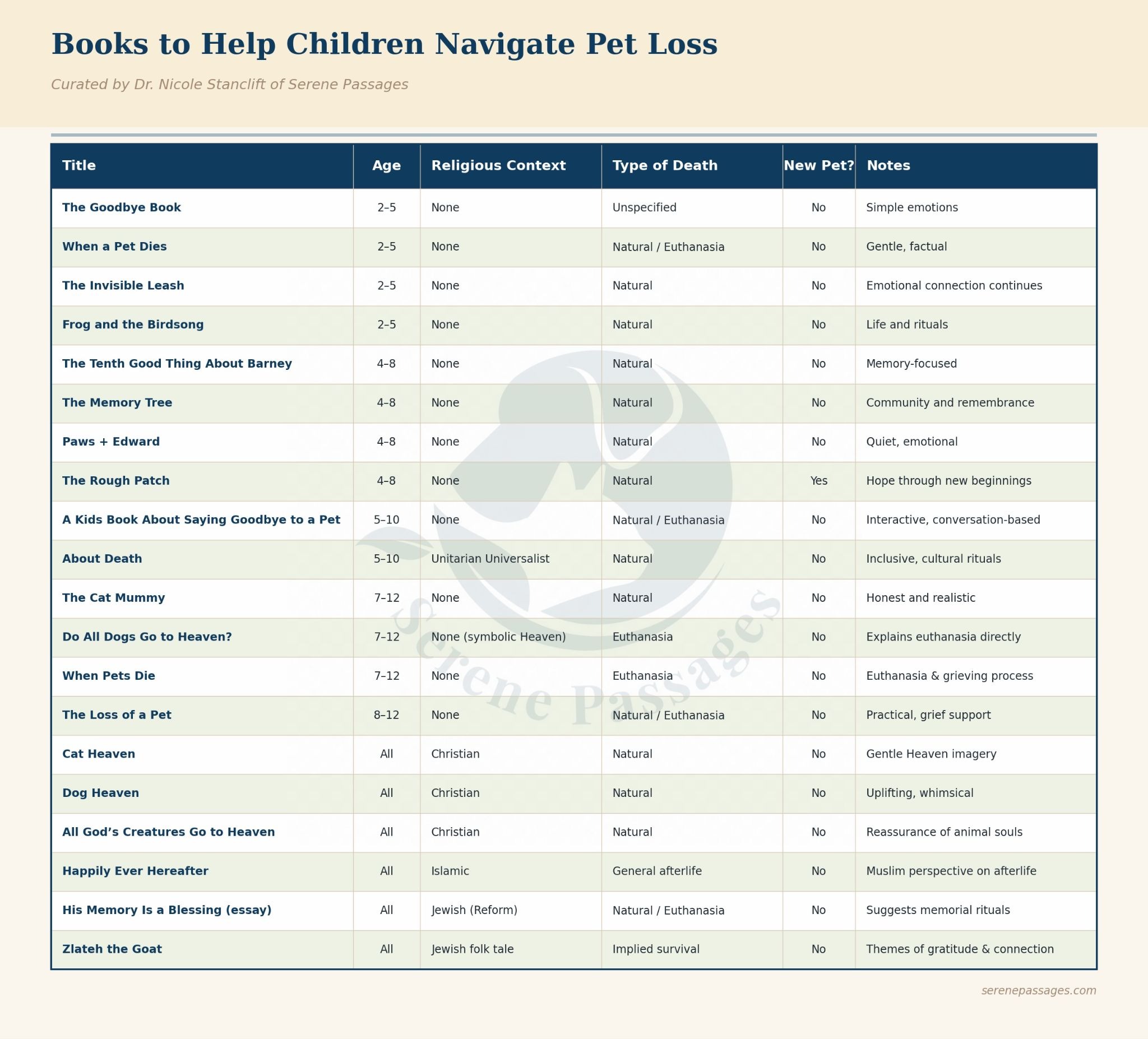
Complete Pet Loss Booklist: Reference Table
To make the search easier, I’ve pulled everything together into a single reference table you can scan at a glance. It lists each title alongside its recommended age range, religious context, the type of loss it addresses, and whether it introduces a new pet.
A Final Word
If you’re reading this because you’re facing a goodbye soon, I want you to know that helping a child grieve well is one of the most loving things you can do as a parent. Grief handled gently becomes a child’s first lesson in how love endures. A book won’t do that work for you — but it can sit beside you while you do it. From all of us at Serene Passages, be gentle with your family, and with yourself.